

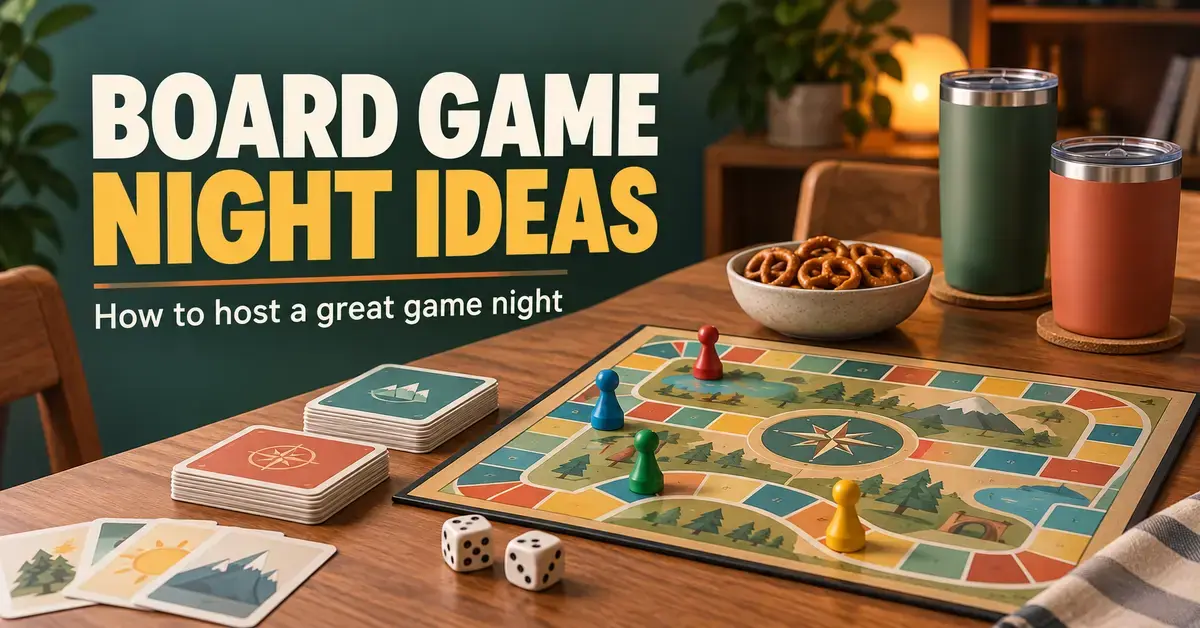
A great board game night comes down to three things: the right people, the right games for that group, and a comfortable space where everyone can see the board and hear each other. You do not need a huge collection or a themed menu to pull one off — a couple of well-chosen games and a simple plan for the evening are enough. This guide walks through hosting a game night from the guest list to the last round: how many people to invite, how to choose and pace games, theme ideas, food, room setup, and the common mistakes that stall an otherwise fun evening.
Key Points
- Invite four to six for the most flexible night; scale games up or down to the count that actually shows up.
- Shortlist three to five games, not your whole shelf, and pace them from light opener to main game to quick closer.
- Learn the rules in advance so teaching takes minutes, not a cold read of the rulebook.
- Keep food dry and drinks contained to protect cards and components.
- Set a rough end time and keep a short backup game ready in case something runs long or falls flat.
What makes a board game night work?
A game night works when the games fit the group and the evening keeps moving. Most sessions fall flat for one of two reasons: a game is too complex for the people at the table, or one long game leaves everyone else waiting. The host’s main job is to match games to the group’s experience and energy, then keep the pace up so nobody drifts off to their phone.
Everything else — themes, snacks, decorations — is a bonus. If you are brand new to tabletop gaming, it helps to understand the basics first; our guide on how to play board games covers components, turn order and how to approach any game, which makes you a far more confident host.
How many people should you invite?
Four to six players is the sweet spot for most game nights. It is large enough to feel social and small enough that almost any game supports the count, and it keeps the gap between a player’s turns short. Beyond that, you have choices to make.
- Two or three people: Lean toward head-to-head strategy or quick card games. Many bigger games scale down poorly, so check the box for a recommended player count.
- Four to six people: The most flexible range. Nearly everything works, from route-building games to team word games.
- Seven or more people: Switch to party games built for crowds, or split into two tables. Long strategy games with eight players create painful waits between turns.
A practical tip: invite an even number if you plan to play partnership games (teams of two), and always confirm who is actually coming before you pick the games, not after.
How do you choose games for your group?
Choose games by matching three things to your guests: their experience, the group size, and how much time you have. Pull a short list of three to five titles rather than offering your whole shelf — too many options slows everyone down before the first game even starts.
Match games to experience level
A mixed table of newcomers and veterans is common, so favour games that are easy to teach but still interesting. If most guests are new, keep the rules light; save the heavier strategy game for a group that knows each other and plays often. Learning a few shared terms helps too — our board game glossary explains words like “meeple,” “drafting” and “worker placement” in plain English.
Mix light and heavier games
A well-paced night often follows a simple arc, like a meal: a light “warm-up” game while people arrive, a longer main game once everyone is settled, and a quick, funny closer to end on a high note. This keeps energy from sagging in the middle and gives latecomers an easy on-ramp.
Check player count and play time before the night
Every game box lists a player count, a recommended age and an approximate play time; read all three before the night, not during setup. The table below shows fact-checked examples across styles and group sizes so you can see the range at a glance.
Game Night Examples by Group Size
| Game (example) | Players | Approx. play time | Style | Good for |
|---|---|---|---|---|
| Just One | 3–7 | ~20 min | Cooperative word game | Easy opener, mixed groups |
| Codenames | 4–8 | ~15–30 min | Team word game | Bigger tables, two teams |
| Telestrations | 4–8 (up to 12 with party pack) | ~30 min | Drawing and guessing | Laughs, all-ages crowds |
| Dixit | 3–8 | ~30 min | Storytelling with pictures | Gentle, creative groups |
| Ticket to Ride | 2–5 | ~30–60 min | Route building | A “main course” game |
| Catan | 3–4 (5–6 with extension) | ~60–90 min | Strategy and trading | Experienced tables |
Player counts, ages and times vary by edition — always check the box or the publisher’s page before the night.
Learn the rules in advance
Nothing drains a room faster than a 20-minute rules explanation read cold from the book. Have at least one person learn each game beforehand so setup and teaching are quick. Our step-by-step guide on how to learn a new board game fast walks through reading a rulebook in the right order, doing a practice turn and teaching others clearly.
Board game night theme ideas
A theme gives the evening a hook and makes choosing games easier, but it is optional — you do not need decorations or costumes to have a good night. Pick the one that fits your group and your shelf.
Pick-a-category night
Build the night around one category. A “classics” night might feature games like Scrabble, Monopoly or checkers; a “modern favourites” night could use route-building and trading games; a “card and dice” night keeps things fast and portable. Our board game rules for the classics hub is a handy reference if you want to brush up before guests arrive.
Decade or retro night
Lean into nostalgia with games and music from a chosen decade. The games do the heavy lifting; a themed playlist and a few snacks from the era are all the dressing you need.
Genre night
Choose a mood — mystery, fantasy, sci-fi or horror — and pick games that match it. A deduction or whodunnit theme is especially easy for mixed groups because the premise explains itself.
Tournament night
Run a bracket or a points table across several short games and crown a champion at the end. This format is great for competitive groups and keeps everyone invested even after they lose a single game.
Co-op night
In cooperative games the whole table plays against the game itself rather than each other, which takes the pressure off newcomers and defuses rivalry. It is a good choice when you want a friendly, low-stakes evening.
Canadian classics night
For a local twist, build a night around kitchen-table staples. Crokinole, a Canadian flicking game dating to 1876, pairs well with card games like euchre and cribbage for an easygoing, chat-friendly evening.
What food and drinks work best for game night?
Keep food simple, dry and easy to eat one-handed, because greasy or sticky fingers ruin cards and components. Finger foods such as chips and dip, veggie platters, crackers, nuts, popcorn, sliders and cookies are reliable choices; a charcuterie board does double duty as a grazing station that never needs a plate.
- Protect the components: Avoid anything orange, greasy or sticky near sleeved cards. Keep napkins or wipes on the table.
- Prevent spills: Cans, bottles or cups with lids beat open glasses next to a crowded board. Give drinks their own side table if you can.
- Share the load: A potluck or “bring a snack” request keeps hosting affordable and covers more tastes.
- Ask about dietary needs: Check for allergies and preferences before you shop, and label anything that contains common allergens.
How do you set up the space?
Set up around a table big enough for the largest game plus everyone’s drink, with seats where every player can reach the board. A dining table usually beats a coffee table because people can sit upright and see the whole layout.
- Lighting: Bright enough to read cards and tiles clearly; soft mood lighting looks nice but makes components hard to see.
- Seating: Comfortable chairs, and enough room to pass pieces without reaching across the board.
- Noise: Keep background music low enough that players can hear each other talk and teach rules.
- Phones: A simple “phones face down during turns” norm keeps the pace up without being heavy-handed.
How do you keep the night flowing?
Keep the night flowing by opening fast, teaching well and staying flexible. Start with a short, easy game as people arrive so nobody sits idle waiting for the group to form. Teach each game in order — the goal first, then the turn, then the exceptions — and run a demo turn rather than reading every rule aloud.
Schedule a short break between longer games for refills and stretching, and read the room: if a game clearly is not landing, it is fine to wrap it up early and switch to something lighter. Agree on a rough end time up front so the evening does not stall at “one more game” when half the table is fading.
Game night ideas for different groups
The best format depends on who is at the table. Tailor the plan to the group rather than using one template for every night.
Two people or a couple
Focus on head-to-head games with direct interaction and little downtime, or cooperative games you can tackle as a team. See how the format works in our guide to two-player board games.
Families with kids
Choose games with simple rules, short rounds and an age rating that suits the youngest player, so everyone can keep up. Our overview of family and party board games explains the traits — accessible rules, flexible player counts, age suitability and round length — that make a game work for a mixed-age table.
Large groups and parties
Reach for party games built for high player counts, or set up two tables running different games. Social word, drawing and guessing games handle crowds far better than slow strategy games.
Online or remote game night
If guests cannot gather in person, a video call plus a browser-based or app version of a familiar game keeps the tradition going. Pick games that do not need everyone to see a shared physical board.
Common mistakes to avoid
Most game-night problems are predictable and easy to prevent. Watch for these:
- Too many heavy games in a row: Stacking long, rules-dense games tires people out. Alternate with lighter titles.
- Teaching a game badly: Reading the whole rulebook aloud loses the room. Learn it first and teach the essentials, then fill in edge cases as they come up.
- Ignoring player counts: A game that shines with four can crawl with seven. Check the box and match the game to who is there.
- One game that excludes people: If a title only supports four, give the others a quick game at a second table instead of making them watch.
- No backup plan: Always have a short, easy game ready for when something runs long or falls flat.
- Messy snacks near components: Greasy or sticky food and open drinks are the fastest way to wreck cards. Keep food dry and drinks contained.
- No end time: Without a loose finish time, the night either drags or ends abruptly mid-game.
Sources
Frequently Asked Questions (FAQ)
How many games do I need for a game night?
Three to five titles is plenty for a typical evening. Aim for one quick opener, one or two main games and a light closer. A short, flexible shortlist is easier to choose from than a full shelf and keeps the night moving.
What are good board games for a mixed group of beginners and experienced players?
Games that are easy to teach but still have depth work best for mixed tables — team word games, drawing-and-guessing games and cooperative games all fit. Keep heavier strategy games for groups that play together regularly.
How long should a board game night last?
Most game nights run two to four hours. Agree on a rough end time at the start so you can plan the games around it, and leave room for a break between longer titles.
What food is best for a board game night?
Dry, one-handed finger foods such as chips, crackers, veggies, nuts, popcorn and cookies are ideal because they do not leave greasy or sticky residue on cards and pieces. Keep drinks in cans, bottles or lidded cups to avoid spills.
How do I host a game night with a large group?
For seven or more people, use party games designed for high player counts or split into two smaller tables running different games. Avoid long strategy games with big groups, since the wait between turns becomes frustrating.
